
Most people think automated social posting is about saving time. That’s the surface-level benefit. The real value is much deeper—it changes how consistently, strategically, and effectively your brand shows up online.
When done properly, automation doesn’t replace marketing. It strengthens it.
Showing up daily on social media is hard—especially when you’re running a business. Automation removes that pressure.
Instead of relying on motivation, you rely on systems. Content is planned, scheduled, and delivered consistently, whether you’re busy, offline, or focused elsewhere.
This is where most brands fall short—and where automation creates immediate leverage.
Manually posting every day is one of the lowest-leverage activities in a business.
Automation allows you to batch content creation, schedule it in advance, and free up time for higher-value work—like strategy, sales, or product development.
It’s not about doing less. It’s about doing what actually moves the business forward.
When your posting is consistent, your brand becomes familiar.
People start to recognize your tone, your visuals, and your messaging. That familiarity builds trust—and trust drives conversions.
Automation ensures that your brand doesn’t disappear during busy periods.
Automation forces structure.
Instead of posting randomly, you begin to think in terms of content pipelines—what gets posted, when, and why.
This shift alone improves content quality. You’re no longer reacting. You’re executing a plan.
Posting manually across multiple platforms is time-consuming and inconsistent.
Automation tools allow you to distribute content across channels in a controlled, repeatable way. The same message can be adapted and delivered where your audience already spends time.
That means more reach without multiplying your workload.
Social media isn’t just about visibility—it’s about staying top of mind.
When your content is consistent, your audience is continuously exposed to your offers, ideas, and value.
This creates a passive nurturing system where leads warm up over time, without requiring constant manual engagement.
When your posting is structured and consistent, you can actually measure what works.
Automation tools often include analytics, allowing you to refine your approach based on real performance—not guesswork.
Over time, this leads to better content, stronger engagement, and more predictable growth.
The biggest advantage of automation is scalability.
Once your system is in place, you’re no longer starting from scratch every week. You’re building on an existing engine that keeps running.
At Techanisms, this is exactly where tools like the Income Mavericks Social Planner come in—helping businesses create structured, repeatable systems for content that actually support growth.
When paired with strong positioning and consistent execution, automation becomes more than a tool. It becomes a competitive advantage.
Automated social posting isn’t about removing effort—it’s about removing inconsistency.
When your brand shows up consistently, strategically, and without friction, everything improves: visibility, trust, engagement, and ultimately, revenue.
The question isn’t whether you should automate. It’s whether your current approach is built to scale.
Consistency online isn’t just about posting regularly—it’s about building a reliable, recognizable experience that your audience can trust. In a digital world where attention is fragmented and competition is constant, brands that show up consistently are the ones that stay top of mind.
At Techanisms, we see this play out across businesses of all sizes. The difference between brands that grow steadily and those that plateau often comes down to one thing: systems that support consistent visibility.
Trust isn’t built overnight. It’s the result of repeated, reliable interactions. When your audience sees consistent messaging, visuals, and value across platforms, it reduces uncertainty. They begin to understand what you stand for and what to expect.
This is especially important in automated environments. If your email flows, social posts, and website messaging feel disconnected, it creates friction. But when everything aligns, your brand feels intentional and dependable.
Inconsistent posting leads to inconsistent results. Algorithms favor activity, but more importantly, audiences respond to familiarity. The more often someone encounters your brand in a meaningful way, the more likely they are to engage when it matters.
This is where automation becomes powerful. Instead of relying on manual effort, businesses can create systems that ensure content, messaging, and touchpoints are delivered consistently without burnout.
Think about the brands you recognize instantly. It’s not because you saw them once—it’s because you’ve seen them repeatedly in a consistent format.
Consistency in tone, design, and messaging creates mental shortcuts for your audience. They don’t have to “figure you out” every time they see you. That familiarity reduces cognitive load and increases engagement.
A good example of this in action can be seen with brands like Income Mavericks, where consistent messaging, visuals, and positioning make the brand immediately recognizable across platforms.
Many businesses underestimate the cost of inconsistency. It shows up as:
Individually, these may seem minor. But together, they create a fragmented experience that weakens trust and reduces conversion rates.
Consistency doesn’t mean doing more manually—it means building smarter systems. Automation allows businesses to maintain a strong presence without constant effort.
At Techanisms, this is where tools like our Social Planner come in—giving businesses a structured way to plan, schedule, and maintain a consistent content rhythm without the daily manual grind.
From content scheduling to lead nurturing, automation ensures that your brand shows up the same way every time—reliably and professionally.
When your brand shows up consistently, something shifts. Engagement becomes more predictable. Leads become more qualified. Growth becomes more stable.
Instead of starting from zero every time you post or launch a campaign, you build on existing momentum. That’s where real scalability begins.
A consistent online presence isn’t just a marketing tactic—it’s an operational advantage. Businesses that invest in consistency, supported by automation and AI, position themselves for long-term, sustainable growth.
The question isn’t whether consistency matters. It’s whether your current systems are designed to support it.
I do woodworking as a hobby. Nothing fancy—just enough to enjoy working with my hands and building things.
There’s a saying you hear a lot in woodworking: measure twice, cut once.
It sounds simple, but it exists for a reason. Once you make the cut, there’s no going back. If you get it wrong, you don’t just lose time—you waste material, and sometimes you have to start over completely.
I was reminded of this while working on a new workbench I’m building. Standing there, measuring, checking, rechecking—it struck me how much this applies to the way businesses are approaching AI right now.
Because right now, most businesses are doing the opposite.
They’re cutting first.
They jump into AI tools, automation platforms, and new systems before they’ve properly understood the processes they’re trying to improve. There’s pressure to move fast, adopt something, and not fall behind.
So they start building.
Automations get set up. Tools get connected. Workflows get stitched together.
But underneath it all, the process itself is still unclear, inconsistent, or broken.
Automation doesn’t fix bad processes—it just makes them run faster.
If your workflow is messy, automation doesn’t clean it up. It scales the mess. It creates more edge cases, more confusion, and more time spent fixing what should have been thought through at the start.
It’s the business equivalent of cutting a piece of wood before you’ve measured it properly. You might only be off by a small amount—but by the time everything comes together, nothing fits the way it should.
And now you’re either patching things together… or starting over.
“Measuring twice” in business isn’t about overthinking. It’s about clarity.
Before you automate anything, you need to understand what’s actually happening day to day.
A simple way to do this:
Once you have that, you can start evaluating properly.
For each task, give it two simple scores:
This is where most businesses skip ahead. They jump straight to tools instead of stepping back and prioritising.
This is where the Maverick Matrix comes in.
Instead of guessing what to automate, you map your tasks based on impact versus effort.
Most businesses spend too much time in the wrong quadrant. They get pulled into mirages—solutions that feel smart but don’t actually move the business forward.
You’re going to make mistakes. You’re going to automate things that don’t quite work the first time.
That’s part of the process.
But there’s a difference between learning through iteration—and creating avoidable problems because you rushed in without clarity.
When you take the time to map your processes first, something shifts.
And when you finally “cut”—when you implement automation or AI—it fits.
Not perfectly. Not immediately.
But well enough to build on.
Measure twice. Then automate.
There’s a quiet resistance I often see in small business owners — particularly those who’ve built their reputation on relationships.
They’ll say things like:
“I don’t want to lose the personal touch.”
“My clients value that I remember things.”
“I don’t want everything to feel automated.”
It’s usually the more experienced business owners who feel this most strongly.
They’ve built loyalty over years. They know their clients’ children’s names. They remember who supports which rugby team. They know who’s thinking about retirement and who’s planning to expand.
To them, technology can feel like a threat.
But here’s the truth: automation doesn’t remove the personal touch.
It protects it.
Meetings are online. Shopping is online. Entertainment is streamed from home. AI answers questions instantly.
The world is becoming more digital by the day.
In that environment, the businesses that win won’t be the ones that become more automated on the surface. They’ll be the ones who stay deeply personal — consistently.
That’s the edge.
Not replacing human interaction. Enhancing it.
Most small business owners don’t struggle with caring. They struggle with capacity.
You finish a client call and think, “I must remember to check in about that in a few months.” Then income tracking, deadlines and day-to-day operations take over.
Six months pass.
Not because you don’t value the relationship — but because your memory is carrying too much.
This is where Income Mavericks changes the game. Not by sending robotic emails, but by holding context.
Yes, you can personalise emails properly. You can use someone’s name. Reference their business. Acknowledge where they are financially.
But real personalisation goes far beyond merge fields.
Inside Income Mavericks, you can:
Imagine a client mentions their son is starting university in September. You make a quick note. In August, a reminder appears: “Check in — son starting university.”
You send a quick message.
That isn’t automation replacing you. That’s automation reminding you to care.
When people hear “automation”, they think of external actions — emails, sequences, triggered messages.
But some of the most powerful automation is internal:
No one sees those systems running. But clients feel the consistency.
You follow up when you say you will. You remember what matters. You show up prepared.
I’ve seen experienced business owners hesitate to adopt technology because they believe their value lies in memory and personal connection.
And they’re right — connection is valuable.
But what happens when your client base grows? When complexity increases? When you’re stretched thin?
Technology doesn’t replace your relationship skills. It amplifies them.
The future won’t belong to faceless automation. It will belong to business owners who combine human warmth with structured systems.
Those who use Income Mavericks to track income, record context and schedule thoughtful follow-ups — while still picking up the phone personally — will always have the edge.
Automation shouldn’t change who you are. It should support who you already are.
If you’re thoughtful, it makes you more consistent.
If you’re proactive, it makes you more reliable.
If you care, it ensures that care doesn’t slip through the cracks.
The human element was never the problem.
Disorganisation was.
Overload was.
Burnout was.
Systems remove friction so that when you speak to a client, you’re fully present — not scrambling to remember what was said three months ago.
Stop asking, “Will automation make me less personal?”
Start asking, “How can automation help me show up better?”
Because in a world that’s becoming increasingly digital, the businesses that win will be the ones who stay human on purpose.
And the smartest ones will use systems like Income Mavericks not to replace connection — but to protect it.
It’s tempting to wait for the perfect, large-scale automation project before investing time. But in reality, some of the best returns come from small, almost invisible workflows—things like auto-forwarding a specific email, renaming files in a shared folder, or logging calendar events into a spreadsheet.
These little processes compound. Shaving off 30 seconds from a daily task might not feel urgent, but over a month or year, it can translate into hours of reclaimed time—and more importantly, fewer mental switches that interrupt your focus.
Imagine you’re manually labeling a certain kind of email 3–5 times per day. With a simple automation in Gmail or using a tool like Techanisms, that workflow can be completely hands-off.
Don’t overlook the power of tiny automations. They’re the quiet background tools that let you focus on the work that matters.
Most business owners are still selling like it’s the 1990s—leading with features, price, or their “years in business.” That worked back when trust was automatic. Today, distrust is the default setting.
People don’t just doubt businesses; many doubt their own decision-making. They hesitate, stall, and ghost—not because they don’t believe you, but because they don’t trust themselves.
That means your marketing, sales, and client experience need to solve two problems at once: their doubts about you, and their doubts about themselves. And the only way through is trust.
Think about how people buy now. If you show up sounding like every other vendor—“we’ve been around since 1984” or “we offer great customer service”—you’ll be tuned out before you finish your sentence.
Trust is now the tollbooth. If you don’t pay the toll in credibility, proof, and understanding, you don’t get through.
This is why so many ads don’t work anymore. Why referrals stall. Why deals take longer. Buyers are flooded with sameness, so they default to inaction.
Instead of trying to close in one shot, you need a trust runway:
This is what we call info-first marketing. It’s slower than the old features-and-price routine, but it removes resistance and makes saying “yes” natural.
At Techanisms, we don’t just set up CRMs and automations. We help you build trust into your business.
Here’s how:
That’s why we say: Systems are Equity. Trust isn’t just about winning the next sale—it’s about making your business worth more in the long run.
If you’re wondering how to put this into action, start here:
The more predictable your business feels, the faster trust builds. And the faster trust builds, the faster sales and referrals follow.
In today’s marketplace, whoever builds trust fastest wins. Most of your competitors are still pitching themselves. You can stand out by showing you understand your customer’s doubts, then removing them with systems that make your business look and feel unshakable.
That’s the work we do at Techanisms—helping business owners turn trust into equity by building systems that make their company more predictable, more valuable, and more scalable.
If you want to stop fighting for attention and start winning on trust, let’s talk.
If you feel buried under endless emails, WhatsApp messages, repetitive admin work, and manual data entry, you’re not alone.
The good news?
By understanding the five levels of business automation, you can free up hours every week, boost efficiency, and scale without burning out.
In this guide, we’ll break down each level — from simple process fixes to custom AI-driven systems — so you know exactly where you are now and how to get to the next stage.
Prefer to watch?
Before any workflow automation tools come into play, your business needs consistent processes.
Without standardization, automation will create chaos rather than clarity.
Examples of Level 1 actions:
This stage is about systemizing before automating — turning scattered habits into repeatable processes.
Most business software already includes automation features you might not be using.
Examples:
These built-in tools require no extra cost and deliver instant time savings.
This is where the real magic begins. Tools like Zapier, Make, n8n and Income Mavericks allow you to link multiple apps without writing code.
Example workflow:
You can even integrate AI to draft email replies, so you start with a polished response.
Here you’ll mix no-code tools with APIs, webhooks, and some light custom scripting.
Example from my own business:
At this stage, your business starts running like a self-managing system.
This is the peak of automation maturity — creating custom software, predictive analytics, and AI-driven decision-making.
Example:
A mining company installed IoT sensors on vehicles to track location, load, maintenance needs, and performance. This data fed into dashboards, financial systems, and operations tools to optimize shifts, costs, and productivity.
For smaller businesses, Level 5 could mean:
The biggest mistake business owners make is trying to jump straight to Level 4 or 5 without building solid foundations.
Instead, work your way up — each step makes the next easier and more impactful.
Which level is your business at right now? Drop your answer in the comments, and if you want a guided path from manual to Maverick, join our Manual to Mavericks community where we share case studies, live workshops, and real-world automation strategies.
In today’s fast-paced digital world, potential clients expect quick and personalized interactions on platforms like Instagram and Facebook.
But if you’ve ever tried keeping up with DMs after a successful post, you know it can get overwhelming—fast. That’s where DM automation steps in.
At Techanisms, we’ve been helping businesses turn social media attention into real conversations through smart automation. In this post, we’ll break down what DM automation is, why it matters, and how tools like Income Mavericks make it easy.
DM automation refers to setting up systems that automatically respond to social media comments or messages with pre-crafted replies—without making it feel robotic. Think of it as your virtual assistant, one that never sleeps and always engages.
When someone comments on your Instagram post with a keyword like “Free” or “Consult,” they instantly get a message in their inbox that guides them to the next step—whether it’s booking a call, downloading a guide, or joining your community.
Example:
A business coach posts: “Comment ‘PLAN’ to get a free business growth checklist.” Someone comments “PLAN.” They instantly receive a DM saying, “Hey! Excited to share the checklist—can I email it to you? What’s the best email to send it to?”
This creates a natural flow that builds trust and filters genuine leads. And you capture their information to continue the conversation.
The more people comment on your posts, the more reach you get. That’s just how Instagram and Facebook work. DM automation encourages comments, which fuels visibility—and curiosity.
Example:
Income Mavericks ran a post that said: “Want our free lead follow-up script? Comment ‘FOLLOW’.” Over 50 people engaged, and the post kept gaining traction for days.
We use slight delays and varied responses so it never feels like a copy-paste. A comment might trigger a reply like:
This keeps the tone friendly and human.
Asking for a quick comment is way easier than expecting someone to fill out a form. Plus, DM open rates tend to be significantly higher than email.
Once someone responds in the DM, you can ask for their email and name (always politely), add them to your CRM, and continue the relationship through email nurturing or sales pipelines.
Example:
A user comments “FREE” on your post. They get a message asking for their email. Once they reply, their info is saved in your Income Mavericks’ database and they’re tagged as a lead.
You now have a warm prospect in your funnel—without lifting a finger.
Income Mavericks includes ready-to-use templates and workflows for Instagram and Facebook comment automation.
Whether you’re offering a free consultation, guide, or access to a members-only community, you can:
No complex setup. Just results.
Turn post comments into lead records, follow up with valuable content, and nurture them over time.
Give away ebooks, training, or community access instantly without manual back-and-forth.
Use automation to qualify interest and drop your booking link only to those who are truly in.
DM automation isn’t about replacing human connection—it’s about starting the conversation in a smart, scalable way. If you’re posting content but not capturing leads, you’re leaving opportunity on the table.
With Income Mavericks, you can turn a simple comment into a conversation, and a conversation into a customer.
Ready to make your DMs work for you? Let’s automate that.
Most businesses don’t lose leads—they quietly abandon them. The difference between someone who says “no” and someone who disappears can have a big impact on your sales.When you know how to tell them apart, you can follow up smarter and recover more revenue.
Lost leads are prospects who clearly indicate they’re no longer interested—either by saying so, unsubscribing, or being marked “Do Not Disturb” (DND). Sometimes they go with a competitor, lack the budget, or just decide it’s not the right time.
Abandoned leads go quiet without explanation. They stop responding but haven’t said no. They’re often stuck mid-funnel—unanswered emails, no-shows, or a forgotten quote.
Accurate labeling improves clarity across your marketing and sales systems.
In Income Mavericks, you can create custom lead statuses like “Lost – Budget” or “Abandoned – No Response” to trigger follow-ups that match the lead’s context. Lost leads are pulled from active outreach, while abandoned leads are routed into long-term nurture.
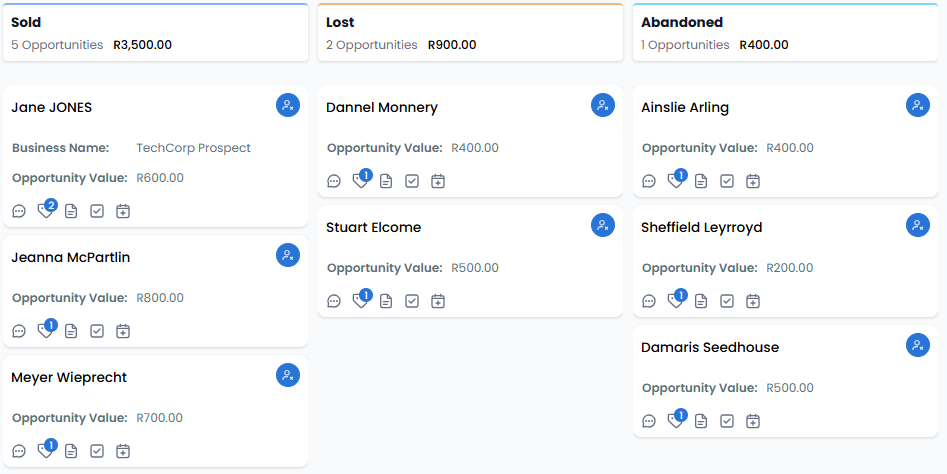
When you track these categories separately, your reports tell a more useful story:
These folks need space—but they’re not gone forever.
These leads are waiting for the right moment—or reminder.
These three steps make all the difference—and are easy to set up in Income Mavericks:
Just because someone stopped talking doesn’t mean they’re gone forever. Some people need more time. Others need a better reason to care.
That’s why smart businesses log the reason a lead cooled off. Too expensive? Bad timing? Picked someone else? Each one deserves a different message.
And here’s a secret: not all follow-up should be digital. Try a printed offer. A quick SMS. A small, unexpected gift. These direct, personal touches often do more than another email.
Your “Lost” list might just be your next win—with the right follow-up, at the right time.
Lost and abandoned leads aren’t dead ends—they’re missed chances waiting to be revived. With the right process, clear labels, and a mix of automation and direct contact, you can turn more cold leads into warm conversations.
Income Mavericks makes it simple to manage this process and put it on autopilot—so nothing (and no one) falls through the cracks.
Adding a phone number to your CRM might seem like a small step — but it unlocks a whole world of communication power that helps you close more deals, follow up faster, and never miss another lead. Here’s why it’s more than just a number.
Let’s start with the basics. Adding a phone number lets you:
It’s fast, efficient, and centralized — no more jumping between apps or wondering who followed up last.
Ever called a company and heard “Press 1 for Sales, 2 for Support”? That’s IVR. And yes, you can do this inside Income Mavericks — even if you’re flying solo.
We call it Missed Call Rescue because missed calls shouldn’t mean missed opportunities.
If someone calls and you can’t answer, Income Mavericks can automatically:
Most people never call twice. This gives you a second chance — automatically.
Got a list of leads to call? The Power Dialer helps you fly through it.
Just hit Start Calling, and the system queues the next number, logs notes, and keeps you focused. Great for follow-ups, reactivations, or outreach campaigns.
It’s like having a personal assistant tee up every call — minus the HR costs.
A lead completes your website’s contact form. Instead of “Thanks, we’ll call you soon,” imagine this:
No delay. No missed momentum. Just real-time conversations that convert.
Whether you’re a seasoned closer or still winging it, call scripts keep conversations focused and effective.
Scripts live right in the call screen. No sticky notes required.
📄 Learn more about Call Scripts
Income Mavericks lets you record every call — and transcribe it, too.
That means you can:
This is gold for coaching, compliance, or catching the details you missed the first time.
What gets measured gets improved — and your calls are no exception.
With call reporting, you can:
Want to know which ads are driving the most calls? Or whether leads from Facebook are more qualified than Google? This data is baked in — no spreadsheets needed.
What happens when a salesperson resigns, takes leave, or (worst case) ghosts you? If they’re using their personal phone, your business number — and relationships — walk out the door with them.
With Income Mavericks:
It’s like call insurance — protecting your relationships and reputation.
Running multiple marketing campaigns? Assign a different phone number to each:
Now you can track exactly which campaign brought in each call — so you double down on what’s working and stop wasting money on what’s not.
Voicemail Drops in Income Mavericks aren’t just a time-saver — they’re a complete automation tool.
Here’s how it works:
The system calls each contact, rings once, then automatically drops your voicemail without needing a live conversationnal to the lead.
Upload or record a pre-written voicemail (like a quick intro or reminder)
Trigger a mass voicemail campaign to your list
Sometimes when leads call, you can’t always answer immediately. That’s where Inbound Voice AI steps in — acting like a friendly virtual receptionist.
Here’s how it works:
Benefits:
Voice AI for inbound is like having a 24/7 team member who never sleeps, never forgets details, and always answers with a smile. (Well… an AI smile.)
We get it — you already have a phone line. The good news?
And when you’re ready, switching fully to Income Mavericks gives you way more control, data, and flexibility — without being tied to outdated phone hardware.
If your business relies on phone calls, don’t leave your phone system stuck in the stone age. Adding a number to Income Mavericks transforms your CRM into a full-blown communication control center.
You’ll stop dropping leads, start better conversations, and finally have the data to scale what works.
Remember when businesses debated whether they really needed a website?
In the early days of the internet, it seemed optional—now, it’s essential. We’re witnessing a similar shift today, except this time, the must-have isn’t just a website—it’s automation and AI.
By 2025, businesses that fail to adopt automation will be left behind, missing out on clients, opportunities, and growth. Let’s dive into why automation isn’t just nice-to-have—it’s the future.
A few months ago, I personally experienced the powerful impact of automation. My garage door unexpectedly broke down, leaving me stuck and frustrated. Naturally, I searched online and filled out contact forms for the top three local garage door repair companies. Here’s how each responded:
Which business do you think won my trust (and my business)? Business #3, hands down.
The secret behind their excellent service? Automation and streamlined systems. Their quick responses, automated scheduling, and seamless follow-ups made all the difference.
The story above isn’t unique to garage doors. It applies to any business, whether you’re a plumber, consultant, bakery owner, or hairstylist. Businesses that ignore automation risk losing customers daily without even realising it. Here’s why:
Ignoring automation today is like ignoring the internet in the mid-1990s—a costly oversight you can’t afford.
Here’s exactly how automation transforms small businesses:
Delaying automation could be silently hurting your business. Competitors already using automation aren’t just quicker—they’re actively capturing your potential customers. The worst part? You might not realise the damage until it’s too late.
This isn’t just a theory—it’s happening right now.
You don’t need to become a tech expert overnight. Here’s how you can start today:
Businesses that embrace automation early will dominate their industries. Are you ready to join them?
If you’re ready to grow efficiently and stop missing opportunities, our community is here to help.
Join us to get practical automation tips, real-world advice, and the support you need to integrate automation seamlessly into your business operations.
If you need help to start sooner than later, please contact us!
Start today—your future business success depends on it.
Join Our Community – Get Started with Automation Now!
As a business owner, I’ve learned how key efficient processes are. By using automated systems, I save time and resources. This lets me focus on what’s really important in my business. It’s all about managing tasks well and saving money.
Phil Laboon, founder of LeadStacker, says tech is a game-changer. It helps us automate, delegate, and work from anywhere. I’ve seen how it makes my business run smoother. By cutting out the unnecessary, automating the routine, and handing over tasks.
I’ve learned to focus on what really matters, not just doing more. This way, I reach my business goals without wasting time. I think every business owner should do the same. It saves time and increases productivity.
Starting my journey to business efficiency, I saw how key digital transformation is in streamline operations. I aimed to cut out tasks that weren’t essential, focusing on what really mattered. Tim Ferris, from The 4-Hour Workweek, taught me to get rid of tasks before automating or delegating them. This approach has been vital to moving forward.
I started by spotting tasks like invoicing and data entry that were repetitive. These tasks were perfect for digital transformation through automation. Automating them saved me time and resources, which I could use for more important business tasks. This move not only made things more efficient but also let me concentrate on tasks that grew and innovated the business.

The main advantages of streamline operations through digital transformation are:
By adopting digital transformation and streamline operations, businesses can gain a lot and stay competitive. As I keep working towards business efficiency, I’m eager to find more ways to use digital transformation and streamline operations to drive growth and success.
Exploring business optimisation, I’ve found three key areas: elimination ➡️ automation ➡️delegation.
Here, I’ll look at how automation and delegation helps you scale your business.
Using robotic automation and ai technology, businesses can make their operations smoother, cut down on mistakes, and work better.
Studies show automation brings big benefits like saving money, better data safety, and happier customers. For example, automating data entry makes it faster and less prone to errors. Marketing automation tools also give insights into what customers want, helping businesses make smart choices.

By using ai technology and robotic automation, businesses can find new ways to grow and succeed. As I keep learning about business efficiency, I’m eager to see how these technologies can help achieve top performance.
On my journey to make my business more efficient, I’ve learned how key elimination is. By spotting tasks that aren’t needed, I can save resources and make things smoother. Machine learning algorithms help me find these areas. With business automation solutions, I can then automate these tasks, freeing up time for more important work.
One way to cut down on tasks is to make a list and remove the ones that aren’t needed. I check each task’s value to my business. If it’s not essential, I can automate or delegate it.
Using machine learning algorithms and business automation solutions can really help my business grow. By automating and cutting out unnecessary tasks, I can focus on new ideas and growth.
Exploring business automation shows how vital it is for efficiency. Automating routine tasks frees up time and resources for more important tasks. Studies show automated processes can be 50% faster than manual ones.
Companies that use automation see a 30% drop in operational costs. Automation also cuts down errors by up to 90%, making processes more accurate. Mastering business automation is key to success in the modern world.
It’s important to understand how automation and automated systems streamline business processes.
Some key benefits of automation include:
By adopting automation, businesses see big gains in efficiency and client service. As I dive deeper into automation, I’m eager to discover more tools and strategies for maximum impact.
On my journey to business efficiency, I’ve learned how crucial strategic delegation is. It helps in achieving efficient processes and driving digital transformation. Delegation isn’t just about giving tasks to others. It’s about setting up a system that lets you focus on important tasks while making time for growth.
Recent stats show that 53% of business owners think delegating 10% of their work can lead to over 20% growth. This shows how powerful delegation can be for success. To delegate well, you need to know which tasks to give away and plan how to do it. Start by making a list of daily tasks and picking the ones you dislike or can be done by others.
Some important things to think about when delegating include:
By using a smart approach to delegation, businesses can reach their full potential. This leads to growth through efficient processes and digital transformation. As leaders, we should focus on strategy and let others handle the daily tasks. This way, we build a business that grows and succeeds over time.
As a small business owner, I’ve found that using technology is key. It helps streamline operations and increase productivity. By using robotic automation and AI technology, we can automate repetitive tasks. This frees up time for more important and creative work.
Choosing the right automation tools can be tough. There are many options out there.
Zapier, for example, works with over 7,000 apps.
By using these tools, small businesses can grow, become more efficient, and save money. Robotic automation and AI technology are powerful tools for success.
I’m excited to share how machine learning algorithms can change daily business operations. With 94% of leaders seeing AI as key to success in five years, AI’s role is clear.
AI’s main benefit is automating routine tasks. This lets employees concentrate on important work. Business automation solutions can cut forecasting errors by 50% and inventory shortages by 65%. For instance, IBM saved USD 160 million with its AI supply chain solutions.
The advantages of AI in daily operations include:
AI can make businesses run smoother, reduce mistakes, and help make better decisions. As I dive deeper into AI, I’m eager to see its global impact on businesses and industries.
Exploring automation, I see how vital it is to measure the return on investment (ROI). Deloitte Touche Tohmatsu Limited found that 61% of people met or exceeded their cost reduction goals with automation.
To find the ROI, we use the formula:
ROI = Savings ÷ Investment
Savings are the difference in time between manual and automated tests, multiplied by the number of tests and runs.
Automation brings many benefits, like increased productivity, better quality, and happier employees. One company saw huge ROI by automating manual journal entries across the whole enterprise. Another company made following up on all outstanding receivables possible in just one day by automating credit and collection processes. Key benefits include:
To make automation work, a strong governance model is key. It’s also important to manage risks, improve compliance, and make audits easier. This way, companies can free up employees for more important tasks, making them happier and more likely to stay. With an average ROI of 250%, usually seen in six months, automation is a smart choice for businesses.
Exploring automation, I’ve learned that digital transformation is more than new tech. It’s about making operations more efficient. Yet, there are traps that businesses should steer clear of when automating.
One big mistake is automating tasks that don’t save much time. For example, a factory might automate a task that only saves a few minutes a day. This might not be worth the cost. But, a big company like First Tech Credit Union saved a lot by automating wire transfers, cutting steps from 105 to five.
Another trap is ignoring the risks and errors that come with automation. Companies like Hertz and Zillow lost a lot because of early automation. They faced false theft reports and wrong property prices. To avoid these issues, it’s key to involve everyone in automation decisions. Also, use methods like Six Sigma or design thinking before starting new automation tools.
To automate well, focus on making operations smoother. Also, check how well your automation works by looking at specific goals. This way, you can dodge common problems and see real benefits. With more demand for automation, being careful and smart in digital transformation is crucial.
Using robotic automation, AI technology, and machine learning algorithms can really strengthen your business. But, it’s crucial to create a strategy that fits your company’s specific needs and challenges.
Start by looking at your current processes and finding tasks that are repetitive. Then, decide which tasks would be best automated. This way, you can make a plan that really works for your business. Remember, automation needs careful planning to work well.
It’s important to keep checking and updating your automation strategy. Stay open to new technologies and encourage a culture of always getting better. With the right strategy, you can make the most of automation and help your business grow in the digital world.
By leveraging the principles of elimination, automation, and delegation, business owners can streamline operations and focus on high-value tasks. Income Mavericks is built to help entrepreneurs do exactly that—automating workflows, managing customer interactions, and optimizing marketing efforts in one seamless platform. From CRM automation to AI-powered marketing tools, Income Mavericks empowers businesses to save time, reduce costs, and scale efficiently, making digital transformation easier than ever.
As a small business owner, it’s key to know about elimination, automation, and delegation. These help make your business more efficient. By cutting out unnecessary tasks, automating repetitive ones, and delegating, you save time and resources. This lets you focus on what’s really important.
Applying the principle of elimination helps you cut out tasks that aren’t needed. This lets you focus on what’s truly important. Tools like machine learning and business automation solutions help identify tasks to eliminate.
Mastering business automation is vital for efficiency. Automation streamlines processes, improves workflows, and saves time and resources. Using robotic automation and AI for repetitive tasks is a good start. Delegation also helps free up time and resources.
Delegation is a key part of optimising your business. By identifying tasks to delegate, you can focus on what’s really important. Using efficient processes and digital transformation helps too.
Small businesses should avoid common automation mistakes, like automating unnecessary tasks. It’s crucial to have a custom automation strategy. Also, measure the return on investment to ensure automation benefits your business.
In order to improve efficiency in any business, there are a few key areas to focus on. One important way to increase efficiency is through business automation. By automating various processes, businesses can improve communication and organizational efficiency while reducing operating costs. In this blog post, we will discuss various ways businesses can automate their operations to improve efficiency.
One way businesses can automate their operations is through customer relationship management (CRM) software. This type of software helps businesses keep track of customer interactions and data. By tracking this information, businesses can quickly respond to customer inquiries and resolve issues more efficiently. Additionally, businesses can use CRM software to automate marketing tasks such as email campaigns and social media outreach.
Another way businesses can automate their operations is through enterprise resource planning (ERP) software. This type of software integrates different business functions into one system. This allows businesses to manage their finances, inventory, manufacturing, and human resources more effectively. Additionally, ERP software can automate various tasks, such as order processing and invoicing.
Businesses can also increase efficiency by automating their accounting and financial processes. Various accounting software programs can help businesses with tasks such as invoicing, bill payments, and expense tracking. By automating these processes, businesses can save time and money while reducing the likelihood of errors.
In addition to the above-mentioned ways businesses can automate their operations, there are many other options available. For example, businesses can use project management software to streamline their project processes. This type of software can help businesses plan and track projects more effectively while also providing tools for collaboration and communication.
Overall, there are many ways businesses can improve efficiency through automation. By implementing various automation technologies, businesses can save time and money while improving communication and organizational efficiency.
Business automation is the process of automating various business processes to increase efficiency and productivity. There are many benefits of automation for businesses, including reducing labor costs, increasing accuracy and efficiency, and improving customer service.
Labor costs are one of the biggest expenses for any business. By automating various processes, businesses can reduce their reliance on human labor, which can result in significant cost savings. Automation can also help businesses increase their accuracy and efficiency by eliminating human error. In addition, automated systems can often provide customers with faster and more efficient service.
Overall, automation can be a major asset for businesses of all sizes. By reducing labor costs, increasing accuracy and efficiency, and improving customer service, automation can help businesses improve their bottom line.
Business automation can free up a lot of time for you and your employees. It can also help you improve efficiency and accuracy in your work processes. But what processes should you automate? Below is a list of processes that you may want to consider automating in your business:
1. Lead capture and nurturing – If you’re not already using a CRM system to capture and nurture your leads, you should consider doing so. A CRM system can automate many of the manual tasks associated with lead capture and nurturing, such as sending out automatic emails, creating follow-up tasks, and generating reports.
2. Customer support – Automating your customer support processes can help you provide faster and more consistent service. Consider using customer support software that includes features such as chatbots, ticketing, and knowledge base management.
3. Marketing campaigns – Automating your marketing campaigns can save you a lot of time and help you stay organized. Consider using marketing automation software to automate tasks such as email marketing, social media campaigns, and lead generation.
4. Sales processes – Automating your sales processes can help you close deals faster and improve your sales team’s productivity. Consider using sales automation software to automate tasks such as lead management, customer relationship management, and quote management.
5. Financial processes – Automating your financial processes can help you save time and improve accuracy. Consider using accounting software to automate tasks such as invoicing, expense tracking, and bookkeeping.
These are just a few of the processes that you may want to consider automating in your business. Automating your processes can save you a lot of time and help you improve efficiency and accuracy.
Business automation technology and tools are revolutionizing the workplace. By automating repetitive tasks, businesses can boost efficiency and productivity, freeing up employees to focus on more strategic tasks. Automation also helps businesses to avoid the errors and inefficiencies that can occur when tasks are performed manually.
There is a wide range of automation technologies and tools available, from simple task-based automation to more complex process-based automation. The right automation solution will depend on the specific needs of the business.
Some of the most popular automation tools and technologies include:
Robotic Process Automation (RPA): RPA is a type of automation that uses software bots to automate tasks that would otherwise be performed by humans. RPA can be used to automate a wide range of tasks, from data entry and processing to more complex tasks such as customer service and claims processing.
Workflow Automation: Workflow automation refers to the automation of tasks and processes that are performed on a regular basis. Workflow automation can be used to automate tasks such as document approvals, purchase orders, and invoicing.
Business Process Management (BPM): BPM is a type of automation that helps businesses to optimize and automate their processes. BPM software can be used to model, monitor, and manage processes.
Data Integration: Data integration is a type of automation that allows businesses to connect and manage data from multiple sources. Data integration tools can be used to automatically extract, transform, and load data from disparate sources.
These are just a few of the many automation tools and technologies available. By automating tasks and processes, businesses can improve efficiency, boost productivity, and free up employees to focus on more strategic tasks.
Business automation is the process of automating business processes in order to increase efficiency and effectiveness. Automation can be used to streamline a variety of business processes, including accounting, HR, marketing, and sales. By automating these processes, businesses can save time and resources, and improve their bottom line.
When it comes to automating business processes, it is important to carefully consider which processes to automate and how to automate them. Not all processes can or should be automated, and some processes may be better suited for partial automation. In addition, it is important to monitor the performance of automated processes to ensure they are working as intended and making the desired impact.
There are a number of factors to consider when analyzing the performance of automated processes. One key factor is process efficiency. Automated processes should be designed to eliminate or minimize waste, whether it is in the form of time, resources, or materials. Another key factor is process effectiveness. Automated processes should be able to achieve the desired outcome, whether it is increasing sales, reducing costs, or improving customer satisfaction.
Another factor to consider is process reliability. Automated processes should be designed to run smoothly and without errors. If an automated process is not reliable, it can cause disruptions and lead to negative outcomes.
Finally, process flexibility is another important factor to consider. Automated processes should be designed to be adaptable to changing needs and conditions. If an automated process is not flexible, it may become outdated or obsolete over time.
By carefully considering these factors, businesses can ensure that their automated processes are efficient, effective, reliable, and flexible. By monitoring the performance of automated processes, businesses can identify areas for improvement and make necessary changes to ensure optimal performance.
One of the most important aspects of a successful business is efficiency. When a business is able to streamline its processes and cut down on wasted time and resources, it is able to operate at a higher level and be more profitable. This is where automation comes in.
Automation can be defined as the use of technology to automate tasks that would otherwise be performed manually. In the business world, automation is often used to refer to the use of software to automate certain processes. For example, a company might use software to automate its accounting or customer service functions.
The benefits of automation are clear. By automating certain tasks, businesses can save time and money while also improving accuracy and efficiency. However, before a business can reap the benefits of automation, it needs to first integrate automation into its business model.
Integrating automation into a business model can be a challenge, as it requires a company to change the way it thinks about and performs certain tasks. However, the rewards of doing so are well worth the effort. Below are a few tips on how to integrate automation into your business model:
1. Define your goals
The first step in integrating automation into your business model is to define your goals. What do you hope to achieve by automating certain tasks? By clearly defining your goals, you can develop a plan for how to best use automation to achieve them.
2. Evaluate your current processes
The next step is to evaluate your current processes. What tasks are currently being performed manually that could be automated? Once you have identified these tasks, you can begin to develop a plan for how to automate them.
3. Implement automation gradually
Don’t try to automate everything all at once. Slowly integrating automation into your business model will allow you to better evaluate its impact and make sure that it is having the desired effect.
4. Monitor the results
Finally, once you have implemented automation into your business model, it is important to monitor the results. Are your goals being met? Is automation having the desired effect on your business? By regularly monitoring the results, you can make sure that automation is helping your business achieve its goals.
For many businesses, automation is seen as a necessary evil. It’s a way to improve efficiency and cut costs, but it can also be a major hassle to implement and manage. However, automation doesn’t have to be a headache. By integrating it into your business model, you can make automation work for you.
One way to do this is to use automation to improve your customer service. By automating customer service tasks, you can speed up response times and improve customer satisfaction. For example, you can use an automated system to handle customer inquiries and route them to the appropriate department. You can also use automation to send out automated customer surveys to get feedback on your products and services.
Another way to integrate automation into your business model is to use it to improve your marketing efforts. Automated marketing tools can help you reach a wider audience with your marketing campaigns. For example, you can use an email marketing service to automatically send out updates and promotions to your subscribers. You can also use automation to keep track of your website’s analytics and performance, so you can adjust your marketing strategy accordingly.
Finally, you can use automation to streamline your operations. By automating tasks like billing and invoicing, you can free up time for your employees to focus on more important tasks. Automation can also help you keep track of your inventory and shipments, so you can avoid problems like stock outs.
Integrating automation into your business model is a great way to improve your efficiency and bottom line. By taking advantage of the many benefits of automation, you can make your business run smoother and more efficiently.
Business automation can be a great way to improve efficiency and productivity in your business. However, it is important to regularly analyze the performance of your automation to ensure that it is meeting your expectations. Here are a few tips for analyzing automation performance:
1. Define your goals and objectives. What are you hoping to achieve with automation? Make sure that you have clear goals in mind before you start measuring performance.
2. Track key performance indicators (KPIs). Once you know what your goals are, you can identify which KPIs will help you track progress. For example, if your goal is to increase productivity, you might track the number of tasks completed per day or hour.
3. Collect data and track trends over time. Automation can take some time to ramp up, so it’s important to collect data over a period of time to see how performance is trending. This will help you identify any issues early on and make Adjustments as necessary.
4. Compare performance against objectives. Once you have collected data, you can compare it against your original objectives to see how well automation is performing. If it’s not meeting your expectations, you can make changes to improve performance.
5. Communicate results to key stakeholders. Be sure to communicate your findings to key stakeholders such as managers, executives, and other decision-makers. This will help them understand the impact of automation and make informed decisions about its future use in your business.
Are you looking to improve your business by automating certain tasks? Do you want to know if automation is really the best solution for your business? In this blog post, we’ll take a look at analyzing automation performance so you can make an informed decision about whether or not to automate your business tasks.
There are a few key things you’ll need to consider when analyzing automation performance. First, you’ll need to identify the task or process that you want to automate. Once you’ve done that, you’ll need to gather data about how long it currently takes to complete that task manually. This will give you a baseline to work from so you can compare the performance of the automated task.
Next, you’ll need to determine the performance goals for the automated task. What are you hoping to achieve by automating this task? Once you have your performance goals set, you’ll need to gather data about how the automated task is performing. This data can be gathered in a number of ways, but it’s important that you have a way to track the performance of the task over time.
Once you have all of this data gathered, you can start to analyze it and see how the automated task is performing. Are you meeting your performance goals? If not, what changes do you need to make to the automation? Are there any unexpected benefits or drawbacks to the automation?
By taking the time to analyze automation performance, you can make sure that you’re getting the most out of your automation investment.
As a business owner, you always look for ways to improve efficiency and speed up processes. One way to do this is through business automation. But how do you know if automation is right for your business? And once you’ve implemented automation, how do you measure its effectiveness?
There are a few key factors to consider when evaluating the results of your automation implementation. First, look at the time savings. Automation should save you time in the long run, so if you’re not seeing any time savings, something is wrong.
Next, look at the quality of the output. Automation can help improve accuracy and consistency, so if you’re seeing more errors or inconsistencies, that’s a problem.
Finally, consider the overall impact on your business. Automation can help improve customer satisfaction and loyalty, so if you’re seeing a dip in those areas, that’s something to be aware of.
If you’re not seeing the results you want from your automation implementation, don’t give up! There are a few things you can do to troubleshoot and get back on track.
First, make sure you’re using the right tools. There are a lot of different automation tools out there, so it’s important to find the ones that best fit your needs.
Next, take a look at your processes. Automation can’t fix bad processes, so if your processes are inefficient or poorly designed, that’s likely the root of the problem.
Finally, make sure you have the right people in place. Automation is only as good as the people implementing and using it. If you don’t have the right team in place, you won’t see the results you want.
If you’re still having trouble, there are plenty of resources out there to help you troubleshoot and get back on track. Don’t give up on automation – it can be a great way to improve efficiency and speed up your business processes!
It’s been a little over a year since we first implemented our business automation system and, overall, it has been a success. We’ve been able to cut down on many
The benefits of business automation are well-documented. By automating time-consuming, manual tasks, businesses can increase efficiency and productivity while freeing up employees to focus on more strategic initiatives.
Despite these clear advantages, however, many businesses are still hesitant to make the switch to automation. The thought of implementing a new system can be daunting, and there is always the risk that something could go wrong.
Fortunately, there are steps that businesses can take to increase the likelihood of a successful automation transition. Here are four tips:
1. Define the Problem
Before implementing any new system, it’s important to first identify the problem that you’re trying to solve. What manual processes are currently bogging down your business? What are the pain points that you’re hoping to address with automation?
By clearly defining the problem, you can ensure that you’re implementing the right solution. You’ll also be able to set realistic expectations for what automation can achieve.
2. Do Your Research
Once you know what problem you’re trying to solve, it’s time to do your research. There are a variety of automation solutions on the market, so it’s important to evaluate your options and find the one that best fits your needs.
When evaluating different solutions, be sure to consider factors like ease of use, price, and integration options. You should also read online reviews and talk to other businesses that have implemented automation.
3. Start Small
It’s often tempting to try to automate everything at once, but it’s important to start small. Automation can be disruptive, so it’s important to ease into it.
A good way to start is by automating just one process or task. This will allow you to get a feel for how automation works and how it can benefit your business. Once you’ve had success with one task, you can gradually start automating more processes.
4. Train Your Employees
If you’re going to be successful with automation, it’s important that your employees are on board. They will need to be trained on how to use the new system and may need to change the way they work.
To ensure a smooth transition, provide employees with plenty of training and support. Be available to answer their questions and help them troubleshoot any problems.
By following these tips, you can increase the chances of a successful automation transition. Implementing automation can be a big undertaking, but it’s worth it for the many benefits it can provide.
Manual processes and make our operations more efficient. However, there is always room for improvement and we want to make sure that we are getting the most out of our investment. With that in mind, we’ve been evaluating the results of our automation implementation to see where we can make improvements.
One area that we identified is our data collection and reporting. We’ve been using our automation system to collect data on a variety of metrics, but we haven’t been doing a great job of analyzing that data and turning it into actionable insights. We’re going to be working on that in the coming months to make sure that we’re making the most of the data that we’re collecting.
Another area that we want to improve is our customer communication. We’ve been using our automation system to send out automatic emails and notifications to our customers, but we want to make sure that we’re doing a better job of personalizing those communications. We’re going to be working on that in the coming months as well.
Overall, we’re happy with the results of our automation implementation, but we’re always looking for ways to improve. We’ll continue to work on making improvements in the coming months so that we can get the most out of our investment.